Storage is where most avoidable peptide losses happen. A vial left on a bench, a stock solution thawed and refrozen a dozen times, or a cap left loose in a humid room can all degrade material long before an experiment begins. This guide sets out the storage conventions that peptide manufacturers publish for lyophilized and reconstituted peptides, and how to build them into everyday lab practice.
Label first, conventions second. The storage condition printed on a product label or listed on its product page always takes priority. The guidance below describes general practice across the industry, not a substitute for compound-specific instructions.
Why Peptides Degrade
Peptides are chemically active molecules. Manning and colleagues’ 2010 review in Pharmaceutical Research describes the main instability routes for peptides and proteins: chemical changes such as oxidation, deamidation, and hydrolysis, and physical changes such as aggregation. Four environmental factors accelerate most of them:
- Heat increases reaction rates.
- Water enables hydrolysis and deamidation.
- Oxygen and light drive oxidation, especially of certain residues.
- Freeze-thaw cycling stresses the molecule through ice formation and concentration shifts.
Good storage practice is simply the control of these four factors.
Storing Lyophilized Peptides
Temperature
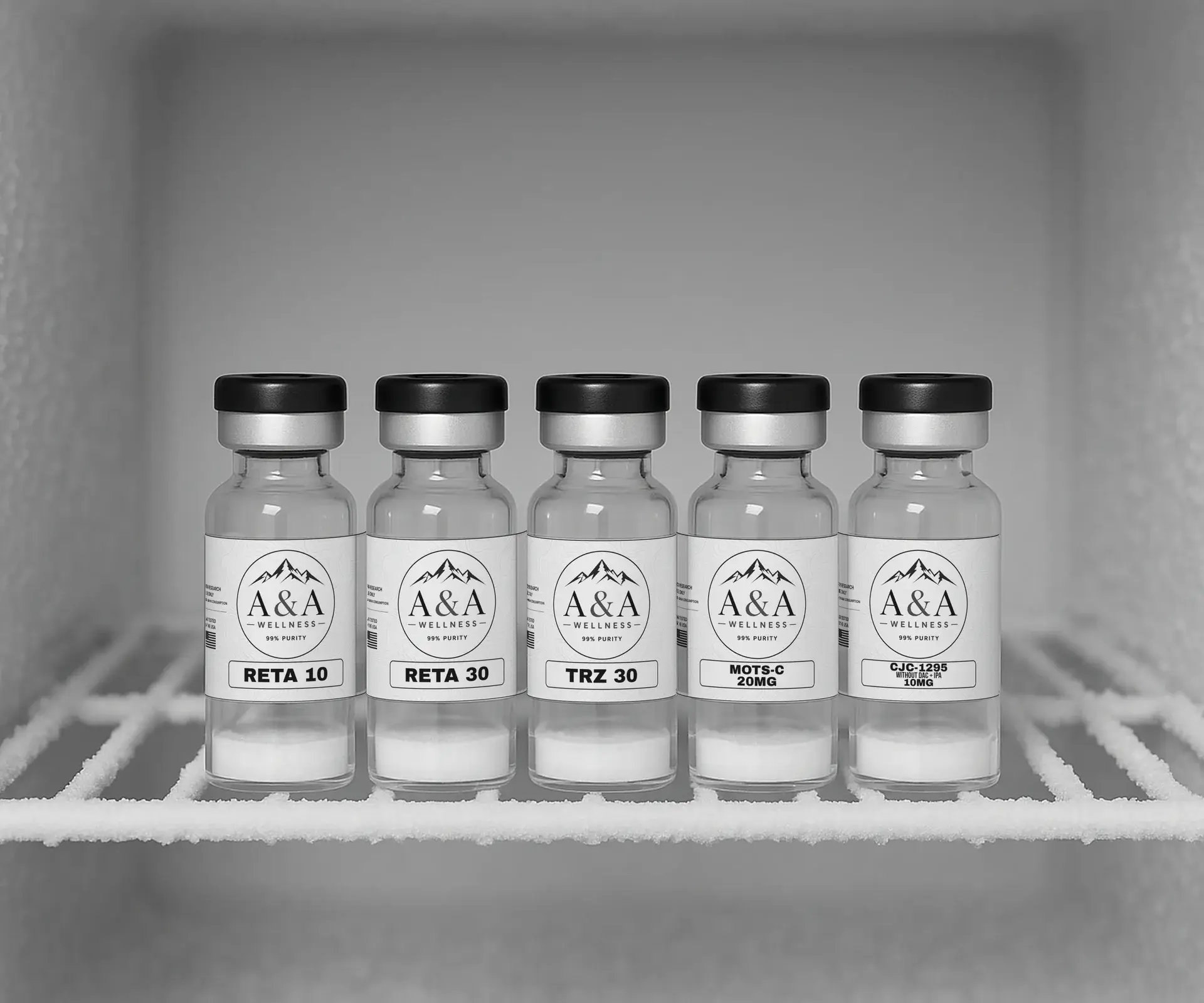
Freezer storage is the long-term convention. Bachem’s handling guidelines recommend keeping lyophilized peptides in a tightly closed container below −15 °C, with lower temperatures preferred for long-term storage. Sigma-Aldrich recommends −20 °C for short-term storage and −80 °C for longer periods.
Refrigeration suits short-term use. Bachem notes that lyophilized peptides may be stored at 4 °C for short-term use and may be shipped at room temperature. Transit at ambient temperature is therefore normal, but vials should go into labeled storage on arrival.
Moisture
Moisture is the main enemy of dry peptides. Many lyophilized peptides are hygroscopic. Sigma-Aldrich notes that moisture exposure greatly decreases long-term stability.
- Keep vials tightly sealed whenever they are not in use.
- Let a cold vial reach room temperature before opening. Bachem recommends doing this in a desiccator, so moisture does not condense onto the powder.
- If you weigh out material from a larger container, work quickly and reseal promptly.
Light and oxygen
Store away from bright light. Sigma-Aldrich advises protecting peptides from light. Opaque boxes or freezer racks with lids work well.
Some residues are oxidation-prone. Peptides containing cysteine, methionine, or tryptophan oxidize more readily in air. Sigma-Aldrich suggests purging opened vials with nitrogen or argon for these sequences. Bachem also flags asparagine and glutamine, alongside those residues, as associated with more limited shelf life.
Storing Reconstituted Peptides
Solutions are the least stable form. Bachem advises that peptides should not be stored in solution for long periods, even in sterile, oxygen-free solution, because they may slowly degrade chemically. Frozen solutions may be kept for a few weeks.
Practical conventions for solutions
- Reconstitute only what you need. Leave the rest of your stock dry.
- Aliquot immediately. Divide any solution you must keep into single-use volumes, then freeze. Bachem recommends aliquoting and storing solutions frozen below −15 °C.
- Avoid repeated freeze-thaw. Sigma-Aldrich advises against repeated freeze-thaw cycles for both lyophilized peptides and solutions. Thaw one aliquot at a time and discard what is left over, rather than refreezing it.
- Keep solutions cold and dark while in use. Work on ice or from a refrigerated rack where your protocol allows.
- Record the preparation date. Every solution vial should carry its preparation date, concentration, and diluent.
Diluent and pH considerations
The diluent affects stability in solution. Bachem notes that solubility and stability depend on the peptide’s properties, and that basic and acidic peptides are best dissolved under different pH conditions. Sigma-Aldrich suggests sterile distilled water or sterile dilute (0.1%) acetic acid for many working stocks.
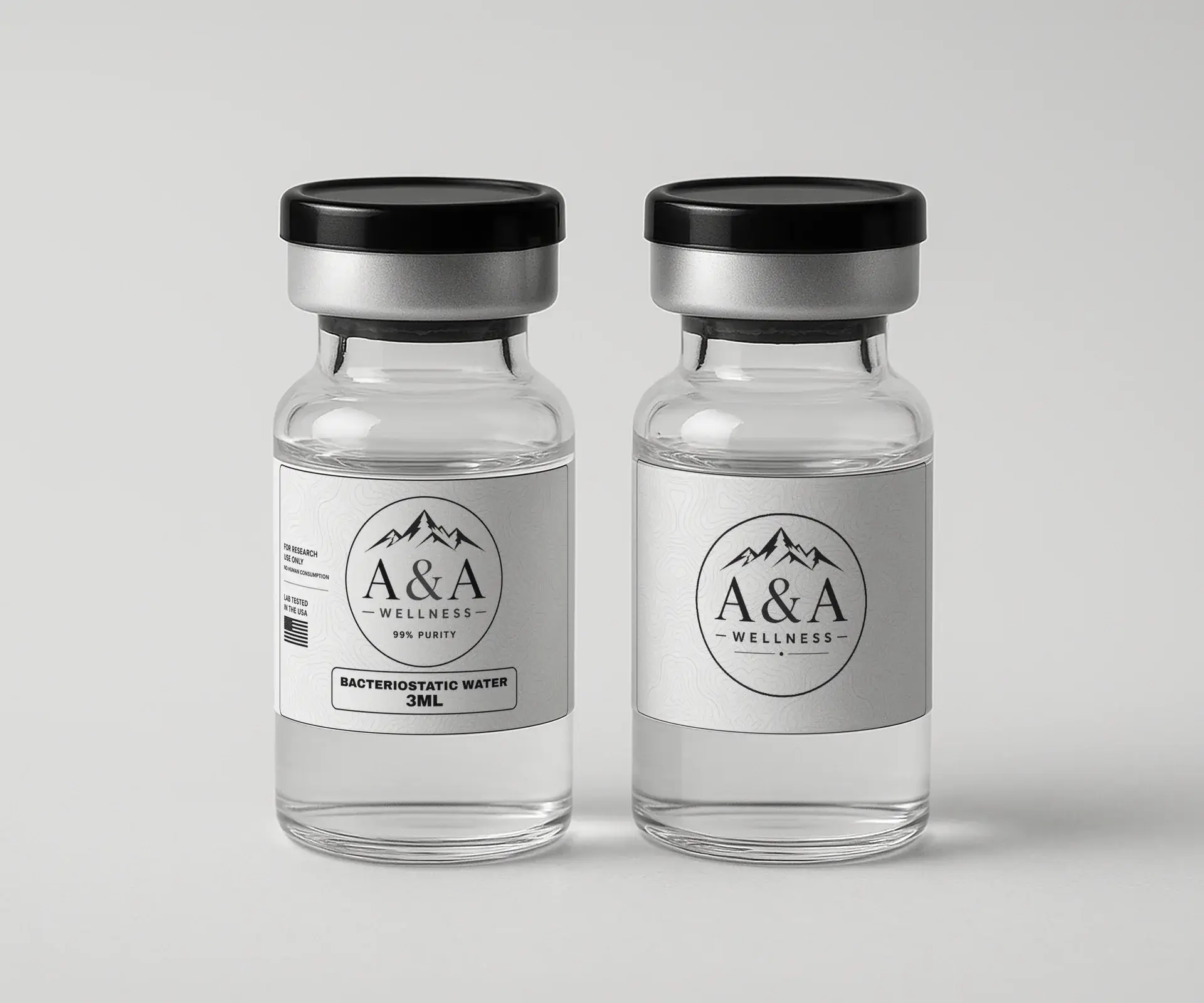
Preserved diluents serve a different purpose. Bacteriostatic water contains 0.9% benzyl alcohol to inhibit bacterial growth in a multiple-use container. It does not slow chemical degradation of the peptide itself. See our comparison of bacteriostatic and sterile water.
Storing Diluents and Supplies
Diluents have their own labels. Pfizer’s labeling for Bacteriostatic Water for Injection, USP, for example, specifies storage at 20 to 25 °C (68 to 77 °F). Store unopened diluent according to its label, and note the date a multiple-use container is first opened. Once a diluent has been used to dissolve a peptide, the peptide’s storage needs take over.
Storage by Product Type
| Material | Typical form | General storage convention |
|---|---|---|
| Single-compound peptides (e.g., tirzepatide, SS-31) | Lyophilized powder | Cold, dry, dark, sealed; freezer for long term; follow label |
| Blends (e.g., GLOW Blend, Wolverine Blend) | Lyophilized powder | As above; conditions should suit the most sensitive component |
| NAD+ | Lyophilized powder | Follow label; NAD+ is a coenzyme rather than a peptide, so check compound-specific guidance |
| Reconstituted solutions | Solution | Short-term only; aliquot and freeze if keeping; no repeated freeze-thaw |
| Bacteriostatic water | Solution | Per diluent label (e.g., 20–25 °C for Pfizer’s labeled product) |
Building Storage Into Lab Workflow
Set up an inventory log
Record compound, lot number, amount, date received, storage location, and date opened. Link each lot to its documentation. When a certificate of analysis is available, file it with the lot. Our COA reading guide explains what to check.
Organize the freezer
- Use labeled boxes by compound and lot.
- Keep a map of box positions so vials are not left out while you search.
- Avoid frost-free (auto-defrost) freezers for sensitive material where possible, because their warming cycles can cause temperature swings.
Label every vial
A clear label prevents both mix-ups and waste. Include:
- Compound name and lot
- Form (dry or solution) and, for solutions, concentration and diluent
- Preparation date and preparer’s initials
- “For research use only”
Common Storage Mistakes
- Opening cold vials immediately. Condensation forms on the powder.
- Storing stock solutions indefinitely. Solutions degrade far faster than dry material.
- Refreezing thawed aliquots. Each cycle adds stress.
- Leaving vials in light. Especially for oxidation-prone sequences.
- Assuming all compounds behave alike. Sequence matters. Check the compound’s education page and the product label.
Key Takeaways
- Store lyophilized peptides cold, dry, dark, and sealed; freezer storage is the long-term convention.
- Equilibrate vials to room temperature before opening.
- Treat solutions as short-term: reconstitute only what you need, aliquot, freeze, and never refreeze a thawed aliquot.
- Follow product and diluent labels first.
For storage details on a specific product, see its page in Research Peptides or Research Supplies. Learn more about how we handle and package products on our quality page.