What tirzepatide is
Tirzepatide is a synthetic peptide that activates two receptors for gut-derived incretin hormones: the glucose-dependent insulinotropic polypeptide (GIP) receptor and the glucagon-like peptide-1 (GLP-1) receptor. Its developer, Eli Lilly and Company, first described it in the scientific literature under the code LY3298176. Tirzepatide is often described as the first “twincretin” (dual incretin agonist) to complete a full phase 3 programme.
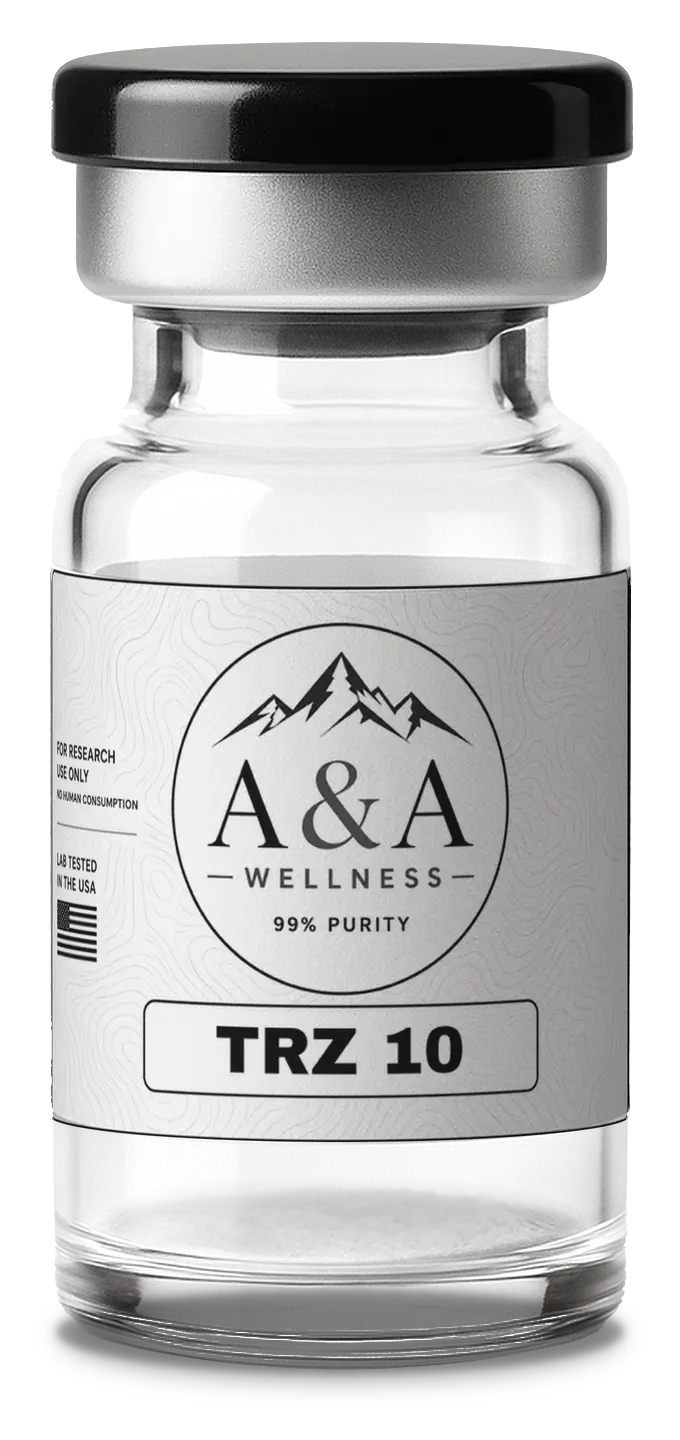
Two very different things share one name. Tirzepatide is the active pharmaceutical ingredient in prescription medicines approved by the U.S. Food and Drug Administration. The material A&A Wellness supplies as Tirzepatide is a research-grade peptide for laboratory use. It is not one of those medicines, it is not a drug product, and it is not for human or veterinary use.
This overview covers classification, structure, the receptor mechanism described in the literature, and the main peer-reviewed clinical studies. It contains no dosing or usage guidance.
Classification and structure
Where tirzepatide sits in the incretin family
The incretin-based peptide family started with GLP-1 receptor agonists. Tirzepatide was an early and prominent dual agonist. A newer investigational compound, retatrutide, adds glucagon receptor activity to form a triple agonist. Our GLP-1 class comparison guide sets the three generations side by side.
Molecular design
The 2018 discovery paper describes tirzepatide as a linear peptide based on the native GIP sequence. It includes non-proteinogenic amino acid substitutions (such as α-aminoisobutyric acid) that resist enzymatic degradation, and it carries a C20 fatty diacid moiety attached through a linker (Coskun et al., Mol Metab 2018).
Why the fatty acid matters. The acyl chain promotes reversible binding to serum albumin. This extends the molecule’s circulating half-life compared with the native hormones, which are cleared within minutes. The investigators reported pharmacokinetics compatible with once-weekly administration in clinical trials.
An imbalanced agonist. The discovery work described tirzepatide as imbalanced. Its potency at the GIP receptor was reported to be comparable to native GIP, while its potency at the GLP-1 receptor was lower than native GLP-1. Later mechanistic literature has also examined biased signalling at the GLP-1 receptor, meaning tirzepatide activates some intracellular pathways more than others. This remains an area of active study.
Mechanism as described in the literature
Both targets are class B G protein-coupled receptors that signal mainly through cyclic AMP. Descriptions of the mechanism come from receptor assays, animal models and human pharmacology studies:
- GLP-1 receptor activity. In the literature, this receptor is associated with glucose-dependent insulin secretion, suppression of glucagon secretion, slowed gastric emptying and central appetite signalling.
- GIP receptor activity. GIP receptors are found on pancreatic beta cells and in adipose tissue and the central nervous system. How GIP receptor agonism contributes to the combined profile, and whether it adds to or modulates the GLP-1 effects, has been one of the most debated questions in the field.
- Glucose dependence. Both incretin pathways are glucose-dependent. Their insulinotropic signalling is stronger when glucose is elevated, which is part of why investigators track hypoglycaemia closely in trials.
Coskun and colleagues reported that the pharmacology observed in preclinical models translated to early clinical studies (Coskun et al., Mol Metab 2018).
Research history and key published studies
Discovery and phase 1/2 (2018)
The Molecular Metabolism paper from December 2018 combined in-vitro receptor pharmacology, rodent studies and early clinical data in one report. It concluded that the compound’s pharmacology justified further clinical evaluation in type 2 diabetes and possibly obesity (Coskun et al., Mol Metab 2018).
SURPASS programme: type 2 diabetes
SURPASS-1 (2021). This double-blind, randomised phase 3 trial, published in The Lancet, compared tirzepatide monotherapy with placebo in people with type 2 diabetes. The investigators reported improvements in glycaemic control and body weight without an increased risk of hypoglycaemia. They described a safety profile consistent with GLP-1 receptor agonists (Rosenstock et al., Lancet 2021).
SURPASS-2 (2021). This open-label, 40-week trial, published in the New England Journal of Medicine, compared tirzepatide at several dose levels with the GLP-1 receptor agonist semaglutide in people with type 2 diabetes already taking metformin. The authors reported that tirzepatide was noninferior and superior to semaglutide for the primary endpoint, mean change in glycated haemoglobin (Frías et al., NEJM 2021). It is one of the most frequently cited head-to-head comparisons in the incretin literature.
SURMOUNT programme: obesity
SURMOUNT-1 (2022). This 72-week, placebo-controlled phase 3 trial in adults with obesity or overweight (without diabetes) was published in the New England Journal of Medicine. The investigators reported substantial and sustained reductions in body weight across the dose levels studied compared with placebo. Gastrointestinal events were the most common adverse events (Jastreboff et al., NEJM 2022).
SURMOUNT-2 (2023). This trial, published in The Lancet, studied adults with obesity and type 2 diabetes over 72 weeks. The authors reported clinically meaningful reductions in body weight and a safety profile similar to other incretin-based therapies (Garvey et al., Lancet 2023).
Beyond glycaemia and body weight
Later clinical research on tirzepatide has examined endpoints including obstructive sleep apnoea, cardiovascular outcomes, heart failure and liver disease. The regulatory history below reflects some of that work. Because this literature grows every year, researchers should search PubMed directly for the latest peer-reviewed reports rather than relying on any summary.
Regulatory status
- Approved medicines contain it. The FDA approved tirzepatide, as Mounjaro, in 2022 for glycaemic control in adults with type 2 diabetes. As Zepbound, it was approved in 2023 for chronic weight management in specified adults, and in December 2024 for moderate-to-severe obstructive sleep apnoea in adults with obesity. These approvals cover specific finished pharmaceutical products made under drug manufacturing regulations, prescribed and used under medical supervision.
- A&A’s material is not those products. A&A Wellness’s tirzepatide is a research chemical supplied for laboratory and in-vitro research. It is not Mounjaro or Zepbound, it is not compounded medication, and it is not intended for human or veterinary use.
- Rules vary. Regulations covering peptides and compounding change over time. See our regulatory overview for general background. It is not legal advice.
Handling and storage in the lab
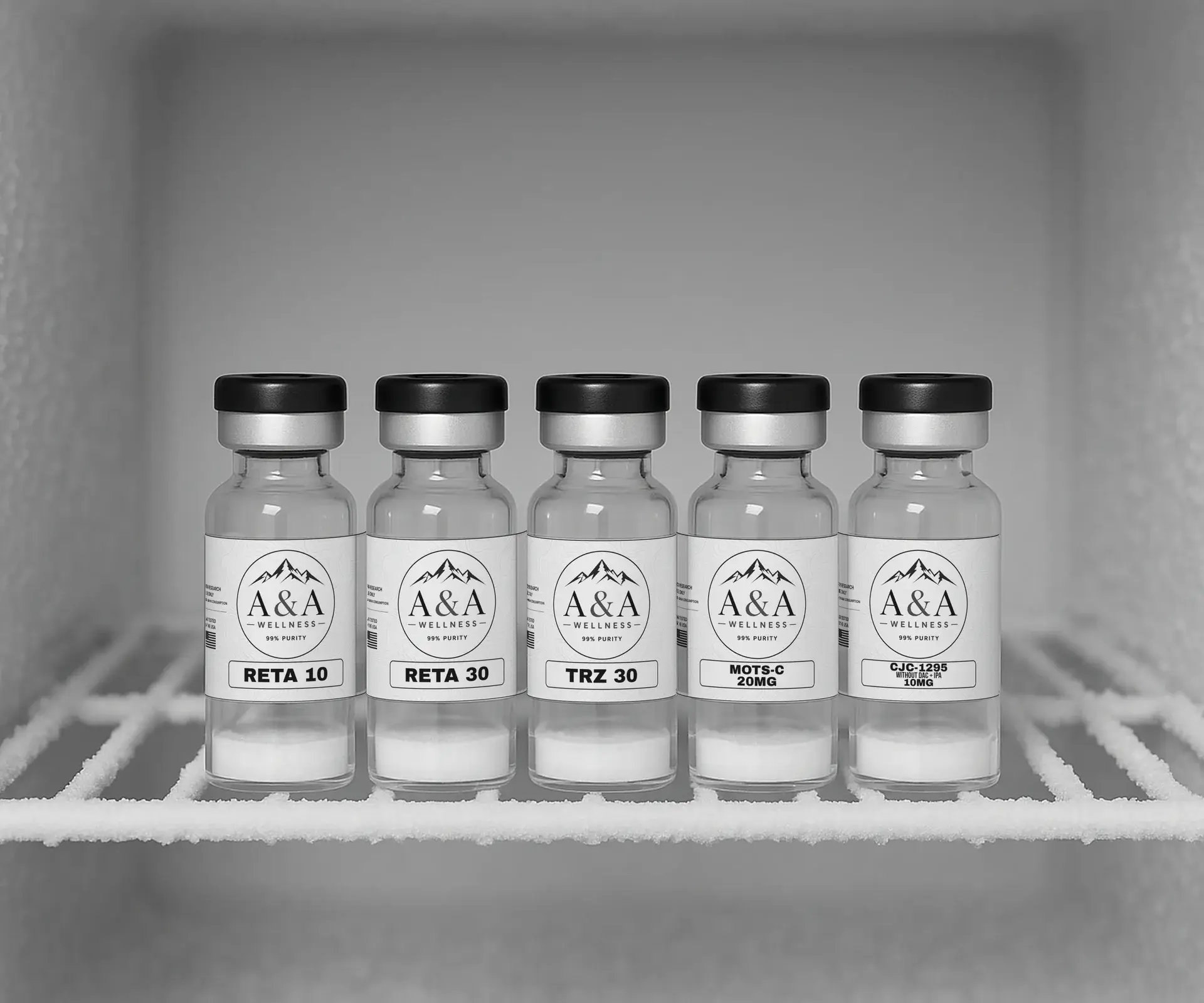
Tirzepatide research material is supplied as a lyophilized powder in sealed vials. General peptide-handling conventions apply:
- Before reconstitution. Keep vials sealed, cold, dry and away from light. Freezer storage is common for long-term holding of lyophilized peptides.
- Opening a vial. Let the vial equilibrate to room temperature while sealed, so moisture does not condense on the powder. Moisture can accelerate degradation.
- In solution. Solutions are generally kept refrigerated and protected from light, aliquoted to limit freeze-thaw cycles, and clearly labelled with the preparation date and concentration.
- Documentation. Check the batch documentation before use. Our guide on how to read a COA explains the typical fields.
Related guides: peptide storage guide, reconstituting peptides for laboratory use and bacteriostatic water vs sterile water.
Research-use notice
All A&A Wellness products are for research use only. They are not for human or veterinary use and are not a drug, food, cosmetic or dietary supplement. This page is educational. It summarizes published research conducted by qualified investigators and does not recommend or describe any personal use of tirzepatide. Please review our Research Use Policy before ordering.
Related resources
- Product page: Tirzepatide
- Related compound: Retatrutide research overview
- Guide: GLP-1 class research compounds compared
- Category: Research Peptides
- Quality: Our quality standards
Sources
- Coskun T, et al. LY3298176, a novel dual GIP and GLP-1 receptor agonist for the treatment of type 2 diabetes mellitus: From discovery to clinical proof of concept. Mol Metab. 2018;18:3-14.
- Rosenstock J, et al. Efficacy and safety of a novel dual GIP and GLP-1 receptor agonist tirzepatide in patients with type 2 diabetes (SURPASS-1): a double-blind, randomised, phase 3 trial. Lancet. 2021;398(10295):143-155.
- Frías JP, et al. Tirzepatide versus Semaglutide Once Weekly in Patients with Type 2 Diabetes. N Engl J Med. 2021;385(6):503-515.
- Jastreboff AM, et al. Tirzepatide Once Weekly for the Treatment of Obesity. N Engl J Med. 2022;387(3):205-216.
- Garvey WT, et al. Tirzepatide once weekly for the treatment of obesity in people with type 2 diabetes (SURMOUNT-2): a double-blind, randomised, multicentre, placebo-controlled, phase 3 trial. Lancet. 2023;402(10402):613-626.