Growth hormone (GH) release from the pituitary is controlled by a small number of signaling pathways. Researchers have developed synthetic peptides that act on those pathways, and the resulting compounds are grouped together as growth hormone secretagogues.
This overview explains the two main families, GHRH analogs and ghrelin mimetics, and profiles three compounds as research subjects: tesamorelin, CJC-1295, and ipamorelin. All descriptions are drawn from published literature and FDA materials. A&A Wellness products are for research use only and are not for human or veterinary use.
The Physiology the Research Builds On
The hypothalamus and pituitary regulate GH secretion through opposing and cooperating signals:
- Growth hormone-releasing hormone (GHRH), a hypothalamic peptide, stimulates pituitary somatotroph cells to synthesize and release GH. FDA prescribing information describes GHRH as acting “on the pituitary somatotroph cells to stimulate the synthesis and pulsatile release of endogenous growth hormone” (FDA label).
- Somatostatin inhibits GH release.
- Ghrelin, acting through the growth hormone secretagogue receptor (GHS-R1a), provides a separate stimulatory input.
Many downstream effects of GH are mediated by insulin-like growth factor 1 (IGF-1), which is why studies of secretagogues commonly measure both GH and IGF-1 as endpoints.
Two Families, Two Receptors
GHRH Analogs
GHRH analogs are synthetic peptides modeled on native GHRH. They bind the GHRH receptor on pituitary somatotrophs. Research modifications typically aim to resist enzymatic breakdown or extend circulating half-life. Tesamorelin and CJC-1295 belong to this family.
Ghrelin Mimetics (GHS-R1a Agonists)
Ghrelin mimetics act on the ghrelin receptor, GHS-R1a, a different receptor from the GHRH receptor. Earlier compounds in this group, the growth hormone-releasing peptides (GHRPs) such as GHRP-6, were studied extensively before ipamorelin. Ipamorelin was described by its developers as the first selective compound of this type.
Why the distinction matters to researchers. Because the two families act through separate receptors, they are studied as distinct tools. Research questions about GHRH-receptor signaling and ghrelin-receptor signaling use different compounds, different controls, and often different endpoints.
Side-by-Side Comparison
| Tesamorelin | CJC-1295 | Ipamorelin | |
|---|---|---|---|
| Family | GHRH analog | GHRH analog | Ghrelin mimetic (GH secretagogue) |
| Receptor target (as described in literature) | GHRH (GRF) receptor | GHRH receptor | Ghrelin receptor (GHS-R1a) |
| Structure | 44-amino-acid sequence of human GRF with an N-terminal hexenoyl moiety (per FDA label) | Modified GHRH analog; long-acting form carries a Drug Affinity Complex (DAC) | Pentapeptide |
| Key published study | Phase 3 trial in HIV-associated abdominal fat accumulation (Falutz et al., NEJM 2007) | Phase 1 PK/PD trials in healthy adults (Teichman et al., JCEM 2006) | Preclinical characterization (Raun et al., Eur J Endocrinol 1998) |
| Research stage | Completed clinical development; marketed | Early-phase clinical studies in healthy adults | Foundational literature is preclinical |
| US regulatory status | Active ingredient in an FDA-approved prescription medicine (EGRIFTA WR) | Not FDA-approved | Not FDA-approved |
| WADA Prohibited List (2026) | Listed (S2) | Listed (S2) | Listed (S2) |
Tesamorelin
What It Is
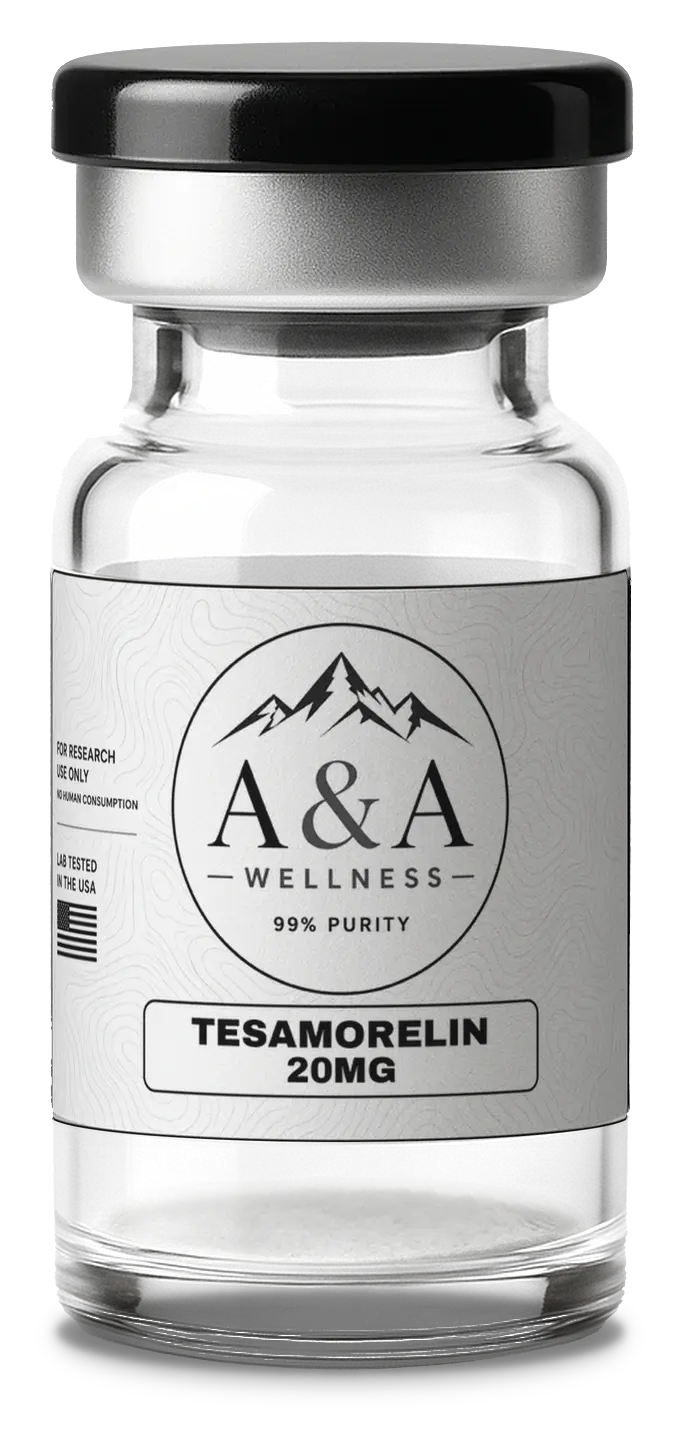
According to FDA prescribing information, tesamorelin is a synthetic human growth hormone-releasing factor (GRF) analog “comprised of the 44 amino acid sequence of human GRF and a hexenoyl moiety” attached at the N-terminal tyrosine. The label states that, in vitro, tesamorelin “binds and stimulates human GRF receptors with similar potency as the endogenous GRF” (FDA label).
Regulatory Status
Tesamorelin is the active ingredient in EGRIFTA WR, an FDA-approved prescription medicine indicated “for the reduction of excess abdominal fat in HIV-infected adult patients with lipodystrophy.” The label lists an initial US approval of 2010 and includes limitations of use, stating among other things that the medicine is not indicated for weight loss management.
Research material is not the medicine. Research-use-only tesamorelin is not EGRIFTA WR, is not manufactured or labeled as a drug, and is not for human use.
How It Has Been Studied
In a trial published in the New England Journal of Medicine in 2007, Falutz and colleagues randomized 412 patients with HIV and abdominal fat accumulation to tesamorelin or placebo for 26 weeks. The authors reported decreases in visceral adipose tissue and improvements in some lipid measures in the tesamorelin group compared with placebo (Falutz et al., 2007).
Read the full profile: Tesamorelin. View the research material: Tesamorelin.
CJC-1295
What It Is
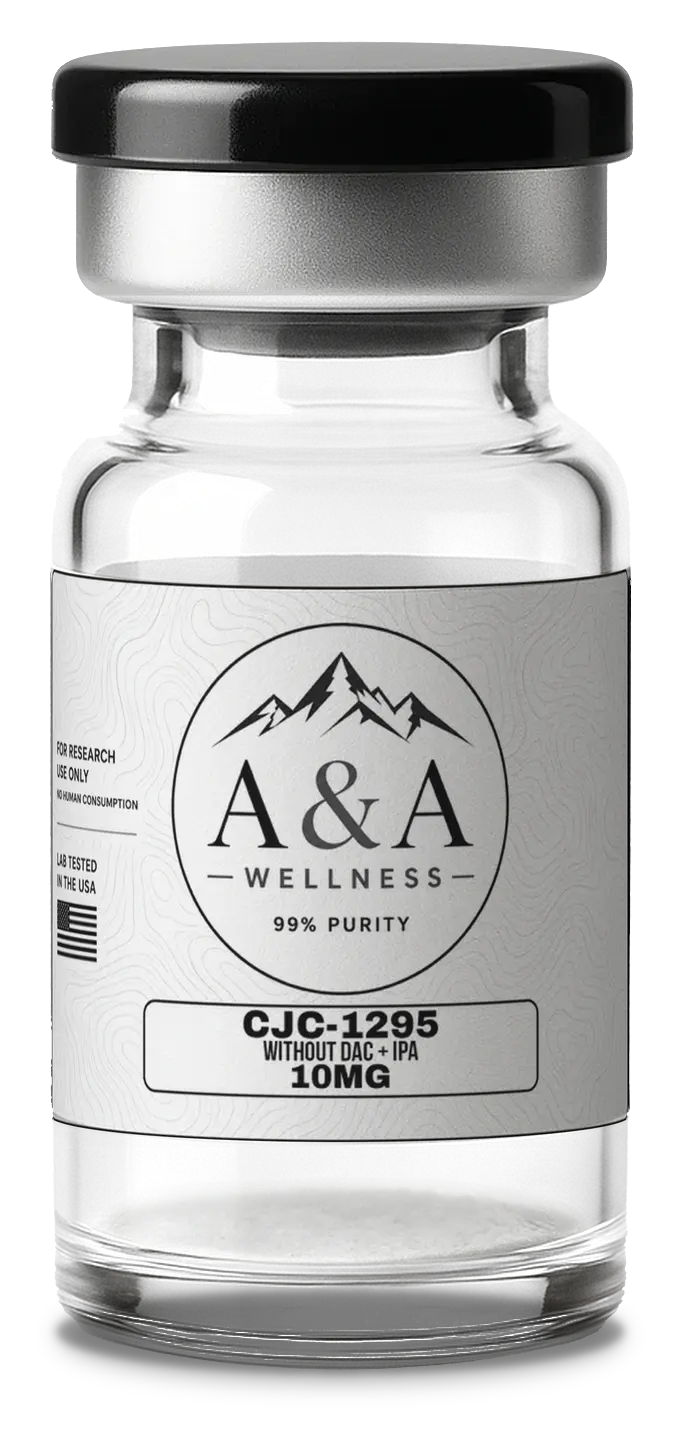
CJC-1295 is a synthetic GHRH analog. Its long-acting form incorporates a Drug Affinity Complex (DAC), a reactive chemical group designed to bind covalently to circulating albumin and thereby extend the peptide’s half-life.
With DAC vs Without DAC
The published human study most often cited for CJC-1295 examined the long-acting form. In two randomized, placebo-controlled, double-blind, ascending-dose trials in healthy adults, Teichman and colleagues reported sustained, dose-dependent increases in plasma GH and IGF-1 after a single administration, and an estimated half-life of 5.8 to 8.1 days (Teichman et al., 2006).
“CJC-1295 without DAC” is the name used for the analog without the albumin-binding modification. Without the albumin-binding modification, it would not be expected to share the extended half-life reported for the DAC form, and published human data specific to this form are limited. Researchers should be precise about which form a given paper studied before drawing on its findings.
Read the full profile: CJC-1295.
Ipamorelin
What It Is
Ipamorelin is a synthetic pentapeptide that acts on the ghrelin receptor. Raun and colleagues, writing in the European Journal of Endocrinology in 1998, titled their characterization “Ipamorelin, the first selective growth hormone secretagogue” (Raun et al., 1998).
How It Has Been Studied
In that preclinical work, the authors reported that ipamorelin released GH in animal models with potency comparable to GHRP-6, while not producing the elevations in ACTH and cortisol associated with earlier GHRPs across the dose range tested. This selectivity is the property most associated with ipamorelin in the literature and the main reason it is studied as a distinct tool from older GHRPs.
Read the full profile: Ipamorelin.
Why These Compounds Appear Together
GHRH analogs and ghrelin mimetics act through separate receptors, and the physiology literature describes GHRH and ghrelin signaling as distinct inputs to the pituitary. That is why some research materials pair a compound from each family. A&A Wellness offers CJC-1295 Without DAC + Ipamorelin as a research material in this format. As with all our products, it is for laboratory research only; nothing on this site describes or recommends any use in humans or animals.
Regulatory and Compliance Notes
- FDA approval. Only tesamorelin, among the three compounds discussed, is the active ingredient in an FDA-approved medicine. CJC-1295 and ipamorelin are not FDA-approved drugs.
- Compounding. FDA’s list of bulk drug substances that may present significant safety risks in compounding includes ipamorelin acetate (for outsourcing facilities under section 503B). CJC-1295 appears in the same FDA page’s list of nominations that were previously in category 2 and later withdrawn by the nominators (FDA). These compounding categories apply to pharmacies and outsourcing facilities, not to research-reagent suppliers, but they indicate how FDA views these substances.
- Anti-doping. The WADA 2026 Prohibited List names CJC-1295, sermorelin, and tesamorelin as GHRH analogues, and ipamorelin as a growth hormone secretagogue, under class S2 (prohibited at all times) (WADA).
For a fuller explanation, see our US regulatory overview for research peptides.
Handling and Documentation
These peptides are typically supplied as lyophilized powders. General conventions are covered in lyophilized peptides explained and the peptide storage guide. Verify each batch against its documentation using our guide to reading a COA. Our broader standards are described on the Quality page.
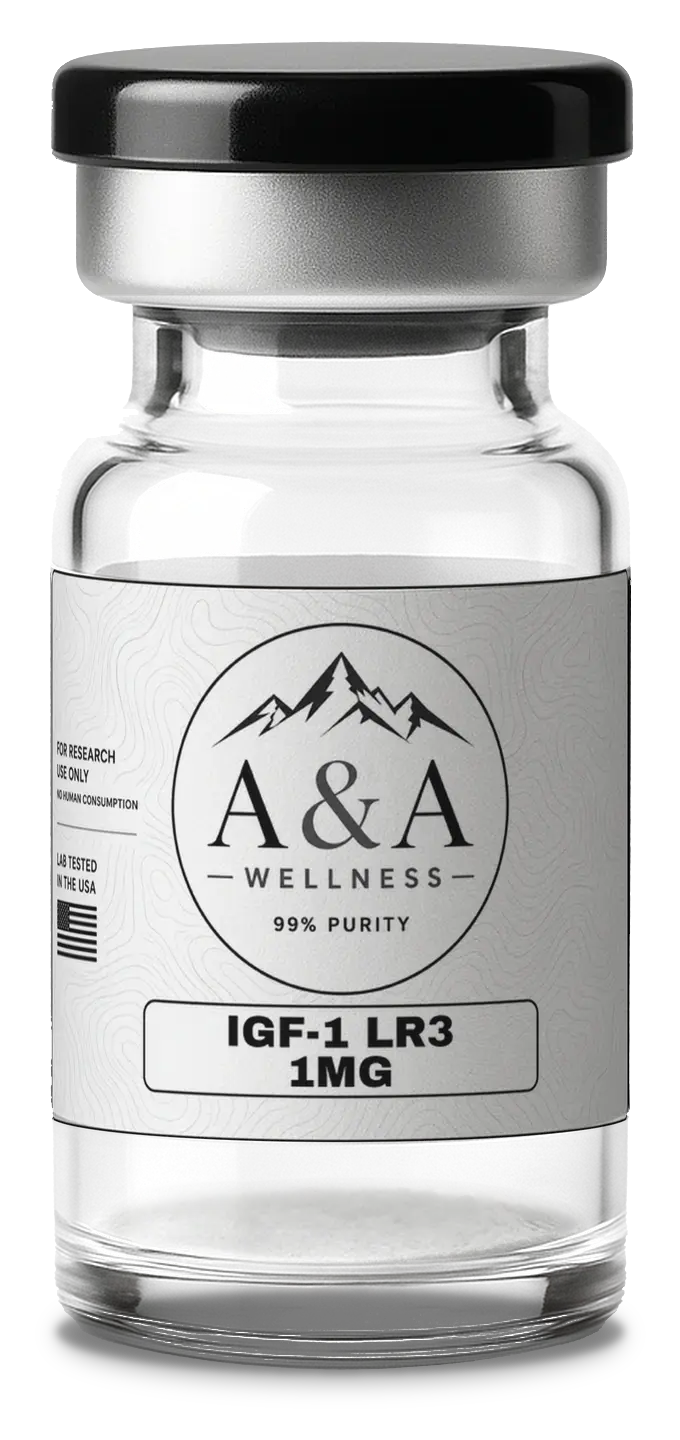
Related research materials: Tesamorelin, CJC-1295 Without DAC + Ipamorelin, IGF-1 LR3, and the full research peptides category.
Sources
- FDA. EGRIFTA WR (tesamorelin) Prescribing Information, 2025
- Falutz J, et al. Metabolic Effects of a Growth Hormone-Releasing Factor in Patients with HIV. N Engl J Med. 2007
- Teichman SL, et al. Prolonged Stimulation of GH and IGF-I Secretion by CJC-1295, a Long-Acting Analog of GH-Releasing Hormone, in Healthy Adults. J Clin Endocrinol Metab. 2006
- Raun K, et al. Ipamorelin, the First Selective Growth Hormone Secretagogue. Eur J Endocrinol. 1998
- FDA. Certain Bulk Drug Substances for Use in Compounding that May Present Significant Safety Risks
- World Anti-Doping Agency. 2026 Prohibited List